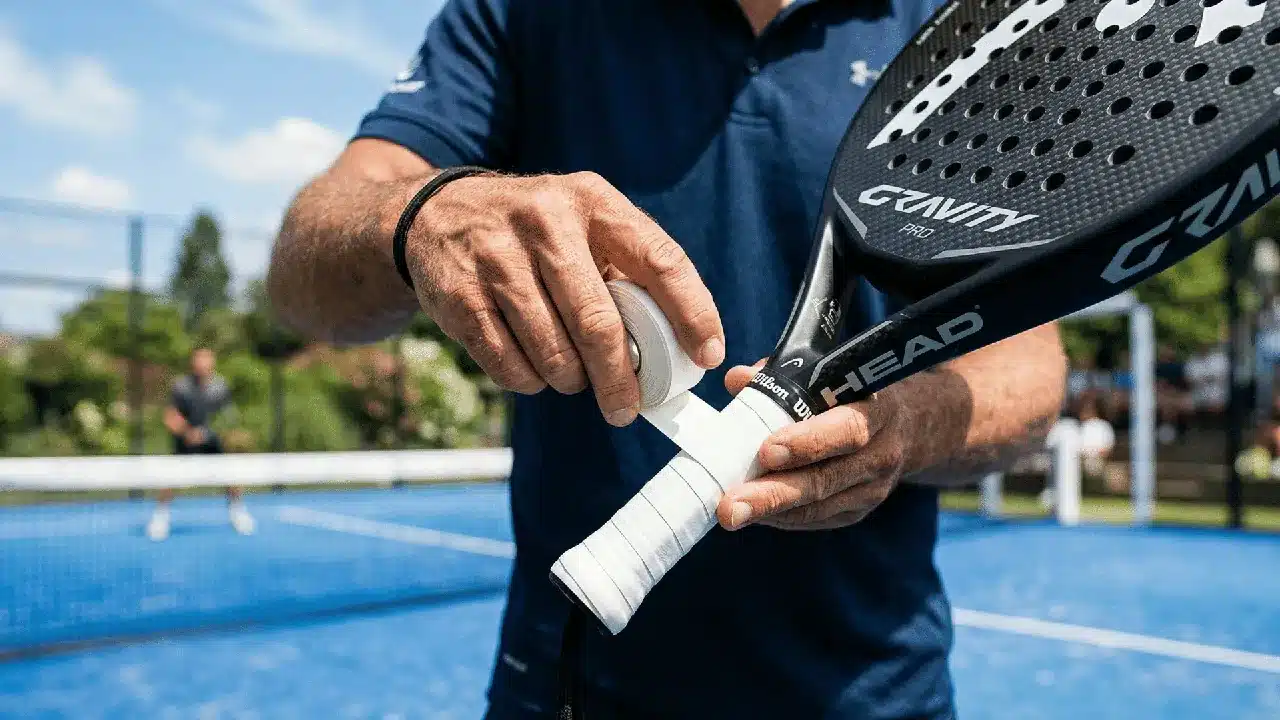
Your padel racket grip size is arguably the most important, yet frequently overlooked, aspect of your entire equipment setup. When shopping for a new racket, the majority of players spend hours analyzing the shape of the face, the density of the internal foam core, and the carbon fiber weight distribution. However, if your handle is too thick or too thin, it absolutely does not matter how expensive or advanced your racket is. Your technique will inevitably suffer, your shots will lack power, and you will significantly increase your risk of developing chronic joint injuries over time.
If you are struggling with unexplained wrist pain, a weak defensive volley at the net, or a complete lack of power on your offensive smashes, the main culprit might be resting right in the palm of your hand. Getting this measurement right is the easiest and cheapest way to instantly upgrade your game.
Why Your Padel Racket Grip Size Matters
Unlike traditional tennis rackets, which are manufactured, measured, and sold in a wide variety of highly specific handle sizes (like 4 1/4 or 4 3/8 inches), padel rackets generally come straight out of the factory with one universal, standard handle size. The manufacturers design them this way because they expect every individual player to manually customize the handle to fit their own unique hand using layers of grip tape.
Playing with the wrong size creates major biomechanical problems. If the grip is too thin, your hand will instinctively over-squeeze the handle just to keep it from violently twisting when you strike an off-center ball. This constant, tense “death grip” exhausts your forearm muscles rapidly and is one of the leading physical causes of lateral epicondylitis (commonly known as tennis elbow). Conversely, if the grip is too thick, you completely lose the ability to use your wrist effectively, making it impossible to execute subtle slices, delicate drop shots, and heavy topspin.
Step 1: The “Rule of Thumb” for Measuring
So, how do you know if you have achieved the optimal thickness? Fortunately, there is a very simple, globally recognized method to check your sizing without needing any special measuring tools or rulers.
Grab your racket and hold it firmly in your dominant hand using a standard continental grip (holding it exactly as if you were shaking hands with the racket edge). Now, look closely at the physical gap between the tips of your wrapped fingers and the base of your thumb (the meaty heel of your hand). You should have exactly enough space to slide the index finger of your non-dominant hand snugly into that gap.
If your fingertips are digging directly into your thumb pad, the handle is undeniably too small. If you cannot reach your other index finger all the way into the gap because the space is too wide, the handle is too large.
Step 2: How to Customize Your Handle
Because the base handle from the factory is almost always too thin for an average adult hand, you must build up the thickness yourself. You achieve this by tightly wrapping “overgrips”—which are thin, specialized athletic tapes—around the factory handle.
Most adult male players need to add between two and four individual overgrips over the factory base grip to achieve the perfect thickness. Female players and junior players typically need between zero and two overgrips. You simply wrap them tightly starting from the bottom of the handle, overlapping the edges slightly as you move upward, until you achieve that perfect one-finger gap measurement.
Step 3: Consider Ergonomic Base Grips
If you regularly struggle with sweaty hands in the summer heat or experience severe arm pain after matches, you may want to look into removing the factory grip entirely and installing specialized ergonomic base grips, such as the popular Hesacore grip. These feature a unique honeycomb rubber design that naturally slots perfectly into the joints of your fingers. This provides an incredibly secure, slip-free hold without requiring you to squeeze tightly. You can read more about official equipment regulations and professional standards on the International Padel Federation website.
Step 4: Maintain Your Padel Racket Grip Size
Once you have built up the perfect padel racket grip size, you must maintain it. Your overgrip is the only point of physical contact between your body and the racket. Over time, heavy sweat, dead skin cells, and abrasive court sand will wear down the tacky surface. If you feel the racket twisting in your hand during a fast rally, it is absolutely time for a fresh grip. Touring professionals change theirs every single match, but casual club players should aim to replace their top overgrip every three to five matches to maintain peak performance.
Upgrade Your Gear in Gran Canaria
Customizing your equipment is the vital first step toward playing a better, pain-free game. If you are traveling to the sunny Canary Islands and need expert help properly building up your handle, our club’s pro shop has a massive selection of premium overgrips, ergonomic base grips, and accessories.
Whether you need professional advice on your equipment setup, want to rent a premium carbon fiber racket to test out on the courts, or are looking to book an all-inclusive luxury sports holiday package, we have everything you need. Reach out to our expert team today to secure your premium court time and experience the ultimate island match!