Stepping onto the court for the first few times is an absolute thrill, but walking into a pro shop and staring at a wall of gear can feel incredibly overwhelming. If you have been using rental equipment and are finally ready to invest in your own gear, finding the best padel racket for beginners is the single most important decision you will make for your game.
Unlike tennis, where the strings can be adjusted for tension, a padel racket is a solid piece of equipment. The shape, the core foam, and the surface material are permanent. Buy the wrong one, and you will find yourself constantly hitting the ball into the glass or, even worse, developing painful “tennis elbow.”
If you want to skip the confusion and pick a racket that will actively help you keep the ball in play, here is your definitive buyer’s guide.
What Defines the Best Padel Racket for Beginners?
When you watch the professionals on the World Padel Tour, you will notice they swing incredibly aggressive, diamond-shaped rackets. As a beginner, you need the exact opposite. You aren’t looking for explosive power just yet; you are looking for control, forgiveness, and comfort.
Here are the three non-negotiable features you need to look for:
The Shape: Why Round is King
Rackets generally come in three shapes: diamond, teardrop, and round. Diamond rackets are top-heavy and built for smashing. Teardrops are hybrids.
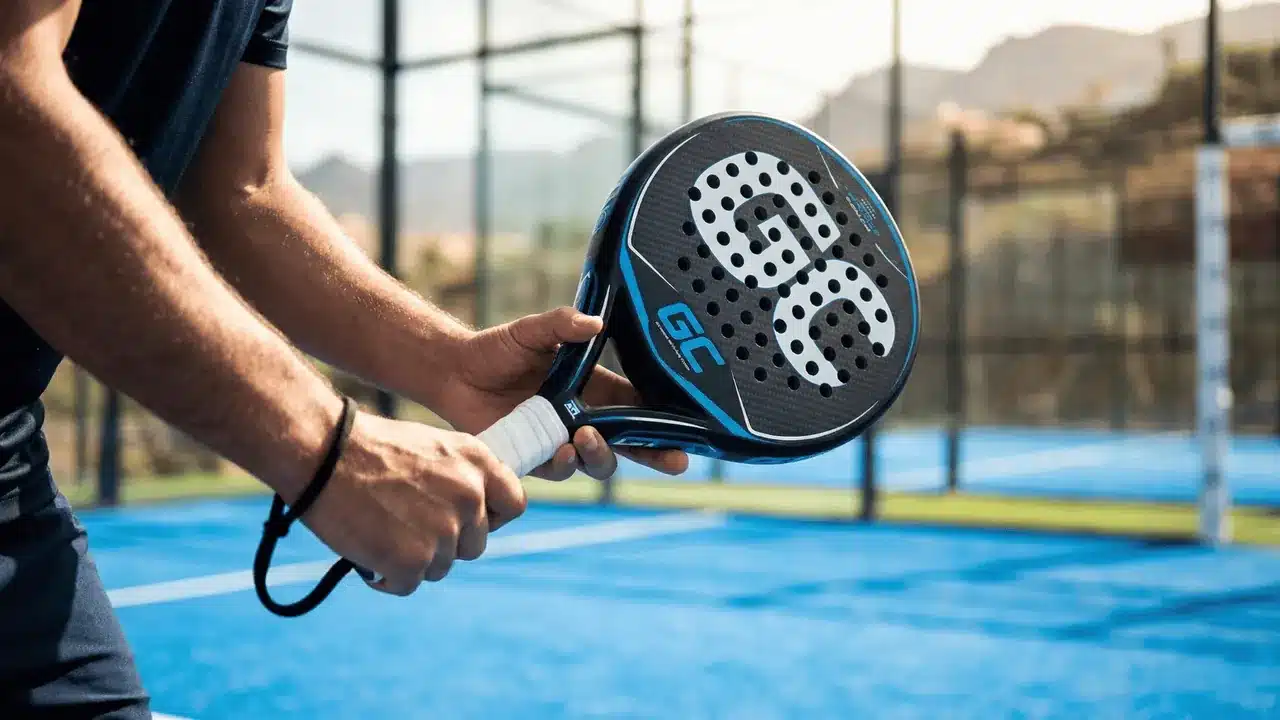
Beginners should exclusively look for a round racket. Round rackets have a low balance (meaning the weight is closer to the handle) and a massive “sweet spot” directly in the center of the face. This means that even if you don’t strike the ball perfectly, the racket will still propel it smoothly over the net. It acts as a safety net for your developing technique.
The Materials: Soft Foam and Fiberglass
The interior core and the exterior surface dictate how the ball reacts off the racket. Advanced rackets are made of rigid carbon fiber. While carbon fiber is incredibly durable, it acts like a brick wall—if you don’t swing hard with perfect technique, the ball goes nowhere.
Instead, look for a racket with a soft EVA rubber or foam core, paired with a fiberglass surface. Fiberglass is much more elastic than carbon fiber. It acts like a trampoline, effortlessly bouncing the ball back over the net without requiring you to take a massive, exhausting swing. It also absorbs vibrations beautifully, protecting your joints. You can dive deeper into the science of racket materials here.
The Weight: Keep it Light and Maneuverable
A standard racket weighs anywhere between 345 and 375 grams. While 30 grams might not sound like a big difference, you will absolutely feel it after swinging it for 90 minutes. Start with a lighter model (around 350 to 360 grams). A lighter racket is much easier to maneuver when you are caught off guard at the net and need to react quickly to a fast volley.
The “Pro Racket” Trap to Avoid
The biggest mistake amateur players make is buying the exact signature racket used by Ale Galán or Agustín Tapia.
These rackets are engineered for athletes who train six days a week and have flawless biomechanics. If a novice uses a stiff, 375-gram diamond racket, they will feel sluggish, they will hit the ball late, and the stiff carbon fiber will send harsh shockwaves straight up their arm. Always buy for your current skill level, not the level you want to be at in five years.
Test Drive Your Best Padel Racket on the Court
Reading specs online is helpful, but nothing beats actually feeling the grip in your hand and hitting a few balls.
If you are visiting Gran Canaria, don’t buy a racket blind. When you book a court at our facilities, you have access to a premium selection of high-quality rental gear. Our coaching staff is always on-site to analyze your swing, let you test out different shapes and weights, and guide you toward the perfect equipment. Grab a court, try a few models, and find the racket that instantly elevates your game!